

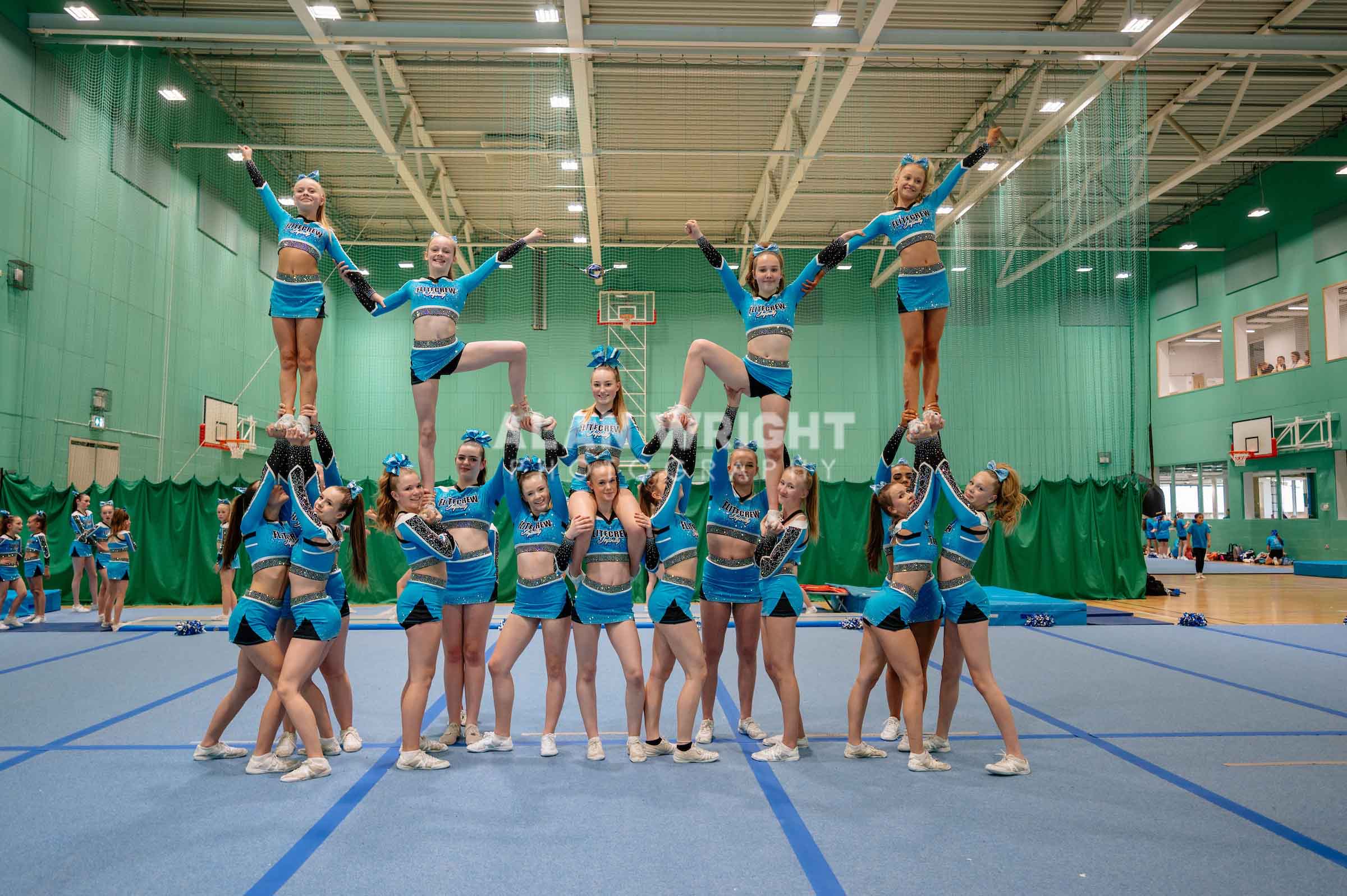
Cheer has elements of gymnastics (©AAH/Alan Wright)
Flitecrew Infinity Cheerleading has enjoyed incredible growth since its foundation a decade ago. AAH attended a club meeting at The Bridge and met founder Laurel Kennedy, senior coach Jordan Kennedy, cheer coach Isa Mitchell, and nine-year-old Matilda Parr, part of its next generation of young stars…
Laurel: I initially established Flitecrew solely as a trampolining club in 1991. As I flew with British Caledonia and British Airways, the club adopted various aviation themes and an Americanised spelling. My daughters, Jordan and Jessica, both started trampolining at a young age and reached a high standard. They have since played a pivotal role in developing the cheerleading section as senior coaches, proving to be inspirational role models for the children.
Jordan: The trampolining club has always been very popular, but in 2016, we felt the time was right to establish a cheerleading section alongside it. Jess and I were both born in the States, so many of the things we love are influenced by American culture. We started the class with about 20 children and now around 170 attend every week.
Isa: In America, sideline cheer is very popular. Sideline is associated with US sports (especially American football and basketball), where cheerleaders are part of the support and entertainment. We don’t have that culture in the UK, yet other forms of cheer – such as all-star cheer – are popular. All-star includes elements of gymnastics, with tumbling, dance and stunting. We put together choreographed routines that require balance, strength and agility. These can include lifts, holds and even throwing members of the team into the air.
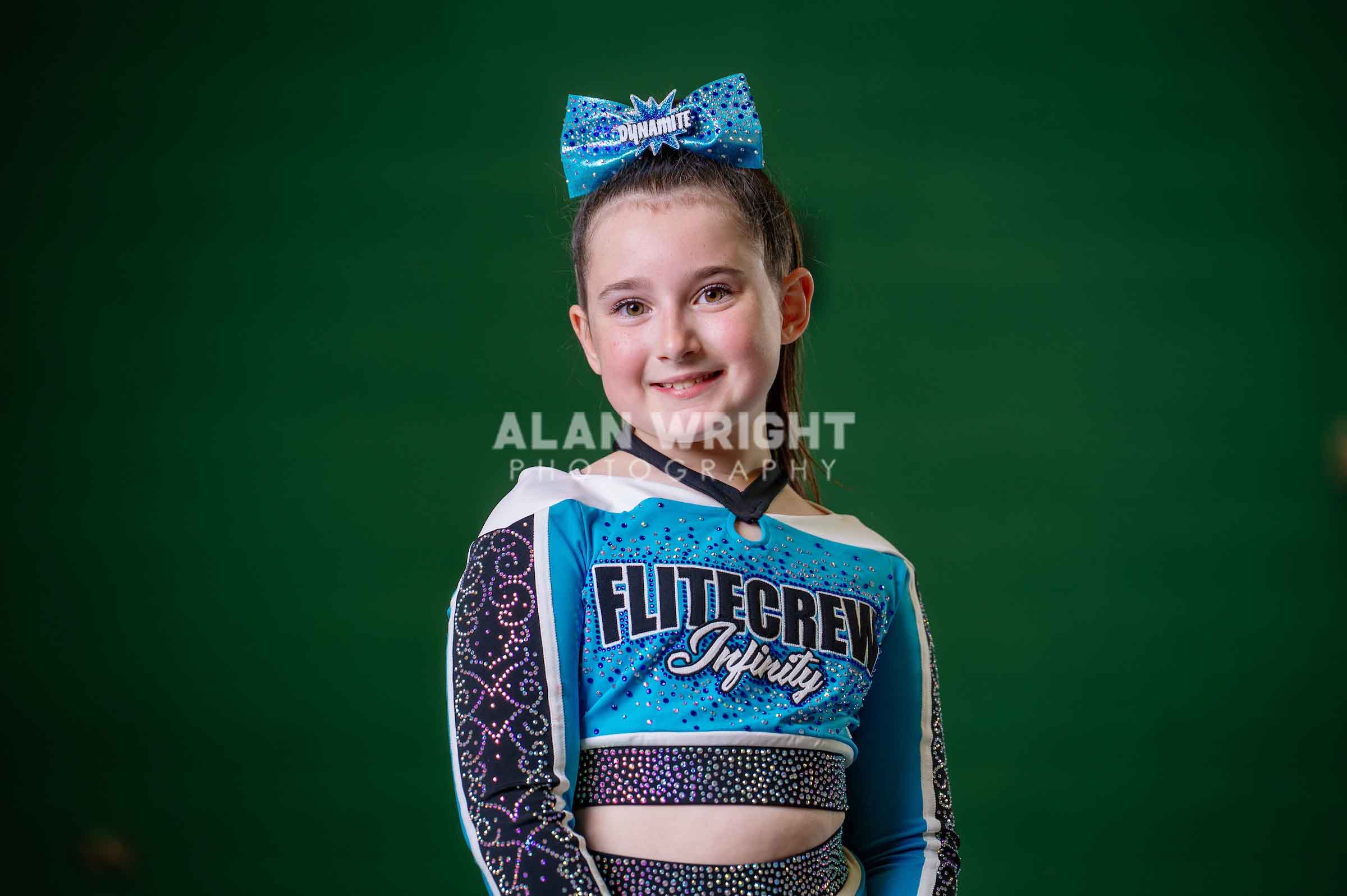
Matilda Parr, Team Dynamite (©AAH/Alan Wright)
Laurel: Cheerleading is a collaboration of gymnastics, acrobatics and dancing. I think that is one reason why so many girls and boys find it so rewarding. It’s a unique discipline that teaches young people about commitment and teamwork.
Matilda: One popular routine involves a group of forming a pyramid. This needs four people, with two base stops gripping the flyer’s feet, and a backstop who holds the flyer’s ankles to give extra support. The base positions also support the flyer when they land after a jump. Flying is good fun, but I like the base roles too, as you have to trust everyone to do their part.
Jordan: Cheerleading is all about teamwork. A competition routine may see four or five individual groups all creating their own pyramid, each with their own leaps and body positions. Synchronicity is important for the success of the entire routine. So, if one person is unable to attend training, it’s hard to build the trust required for difficult routines. We emphasise the importance of teamwork, so that one person doesn’t let down their team and coaches by skipping training in favour of a party. That’s not always easy when you’re dealing with teenagers!
Laurel: Our cheer groups meet at The Bridge on Friday evenings. We have a wide range of groups, from Teenies (who start as young as three) to Minis, Youths and Juniors, then Senior teams. There’s a safe transition between Departures and Arrivals (maintaining an aviation theme) for the girls coming and going. Most children, unless they have prior gymnastics or trampolining experience, begin in our recreational teams. We are an inclusive club, and for some it’s enough to just have fun in these sessions, without the commitment that the competition teams demand.
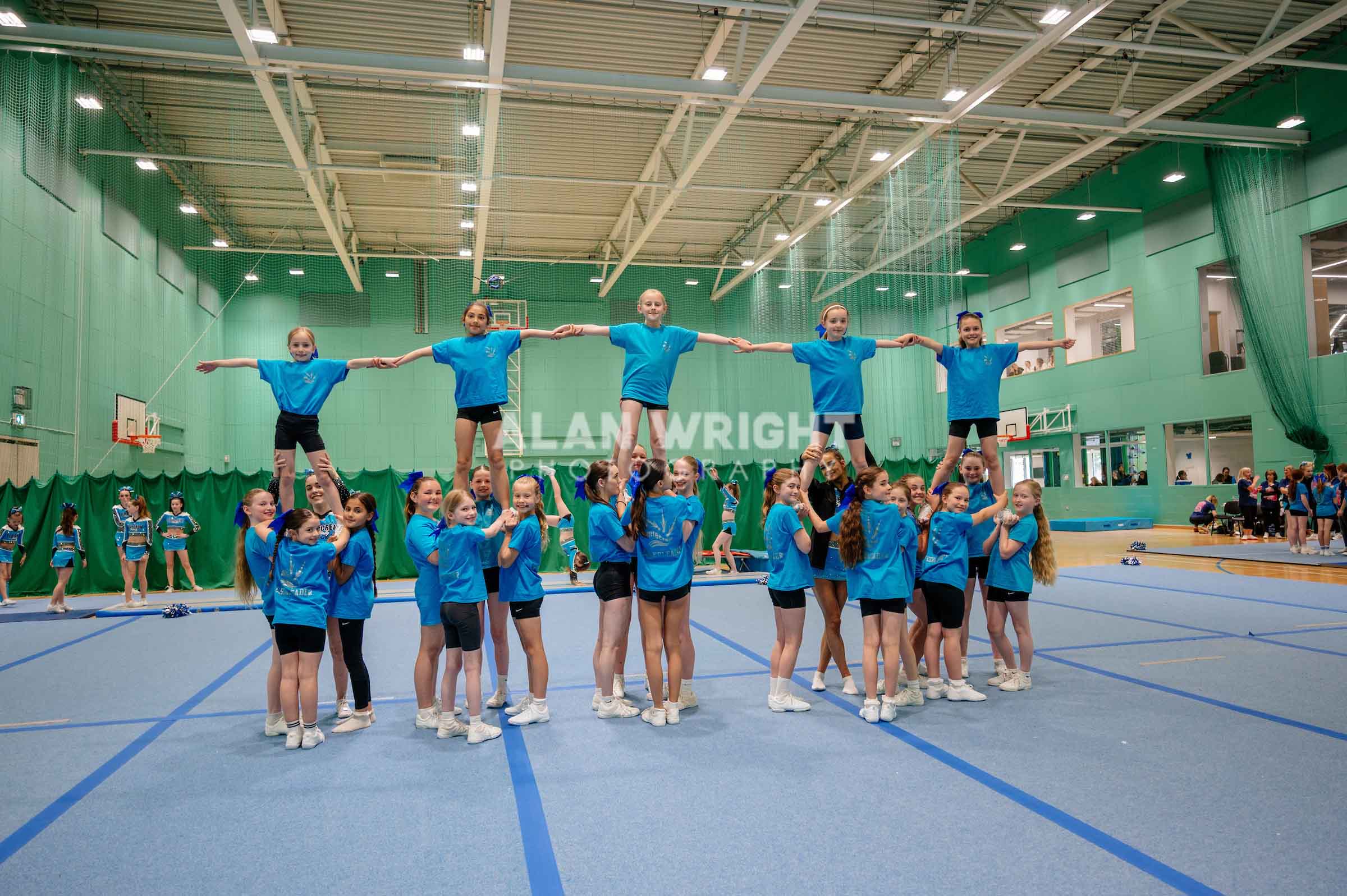
Recreational classes teach young people fundamental skills (©AAH/Alan Wright)
Matilda: I joined when I was four, and started in Teenies. I’ve now progressed to Dynamite, one of the competition teams. Teams like Dynamite and Lightning are for Novice and Prep level. You then progress to the Elite – Altitude, Concorde and Vortex.
Isa: Popular national events such as Future Cheer (FC) Essentials give opportunities for Novice teams to compete. Other events, such as FC Internationals, held at the BIC in Bournemouth, are aimed at Elite teams and give us the chance to compete against the very best in the UK and even overseas. There are several well-established clubs across the country, so although we have enjoyed great success in competitions, our goal is always to beat our own score from previous years. That way, we know we are improving. However, we won a national competition last year, leading to an invitation for our two elite teams to the prestigious European Summit in Lisbon, Portugal, this June. (Vortex finished 6th out of 23 teams in Level 2, with Concorde 8th out of 16 sides in Level 1).
Laurel: The standard of cheer in the UK has improved dramatically over the past decade. When we started out, we were competing against clubs with much more experience. Now, we’ve gone from being the new kids on the block and competing at regional competitions and against the very best at European events. This has been achieved at a time when the standard has risen, mainly thanks to TV shows such as Netflix’s Cheer. At FC Internationals at The BIC on 26-28 June, our final major competition of the year, all three Elite sides excelled, hitting zero (meaning no deductions) as they were placed amongst the best of the best.
Jordan: As well as competitions, we present an annual showcase at The Bridge. This gives a chance for everyone to demonstrate what they have learned, from Teenies to Seniors in both recreational and competition teams. In May, more then 300 spectators enjoyed 26 routines in a range of cheer styles. As well as all-star cheer, we also coach dance style. Although this form has elements of tumbling and lifts, it’s more focused on dance – typically in a jazz or hip-hop style – and often utilises pom-poms.
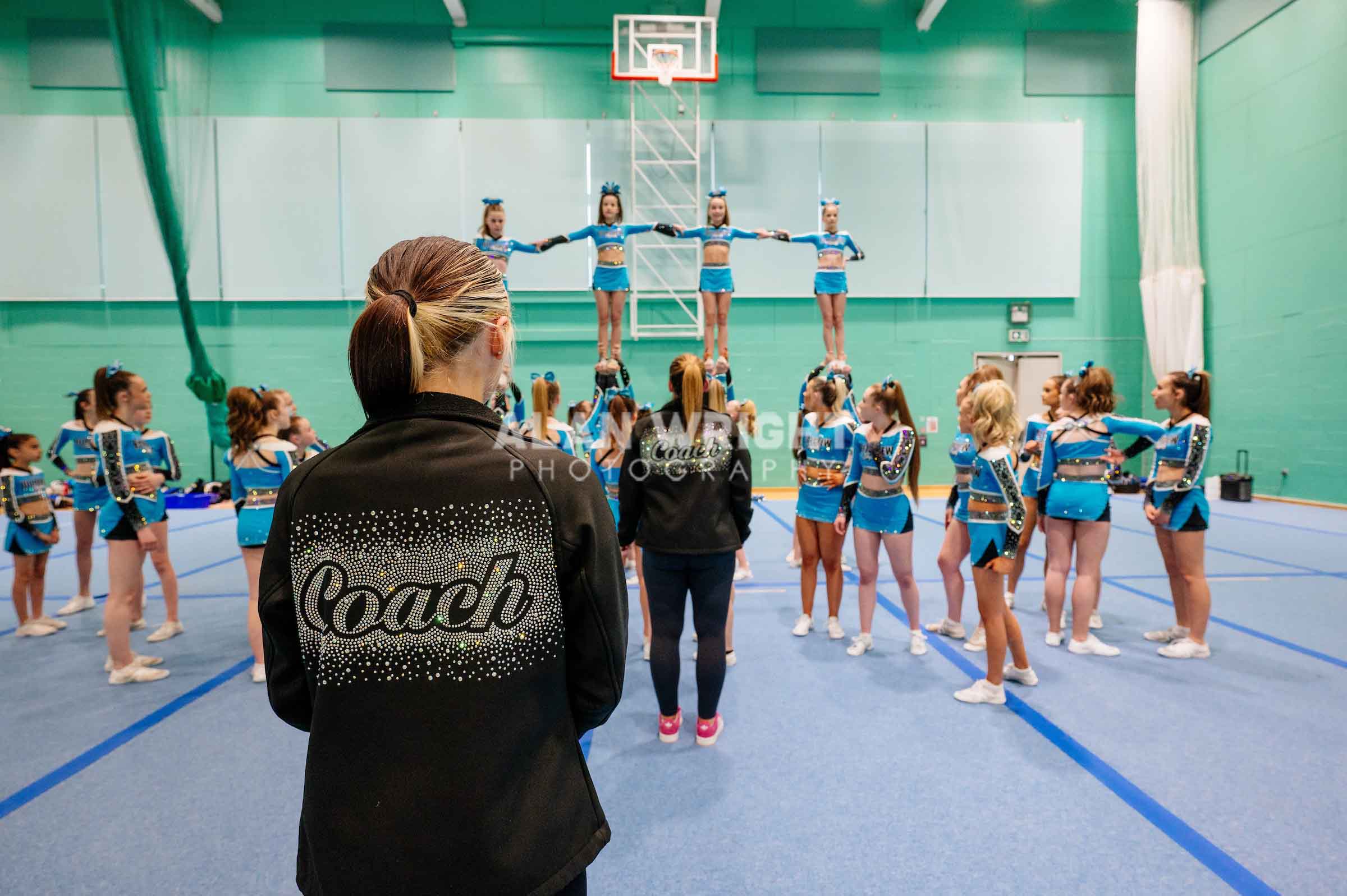
Complex routines require commitment and teamwork (©AAH/Alan Wright)
Laurel: At the end of each season, the competition groups are disbanded and trials are held ahead of a new season in September. This can seem brutal, but it ensures that those in the recreational teams have a chance to break into a competition team if they want to, while others can progress to a more advanced team. It’s a special moment when a child joins a competition team and a big reason for that is the incredible uniform we have…
Jordan: I designed our first outfit in 2016. We wear red leotards for trampolining, so I chose blue for cheerleading. After nine years, it was time for a refresh, so the new uniform has more glitz and sparkle. The atmosphere in the room when we revealed it was just incredible! I spent a long time ensuring that every rhinestone and crystal was perfectly placed. However, costumes must also be safe and functional, which is why girls often wear their hair a certain way for routines, for their safety and that of others. Outside of entering various competitions, the uniforms are the biggest expense for parents, but we’ve tried our best to keep it affordable.
Laurel: We are very proud that many of our girls have gone on to become coaches. We have a wonderful team of home-grown coaches, some of whom still perform in the Elite teams. This gives the youngsters huge inspiration and something to aim for. Coaching also helps them attain things such as Duke of Edinburgh Awards or even accredited coaching qualifications to add to their CV.
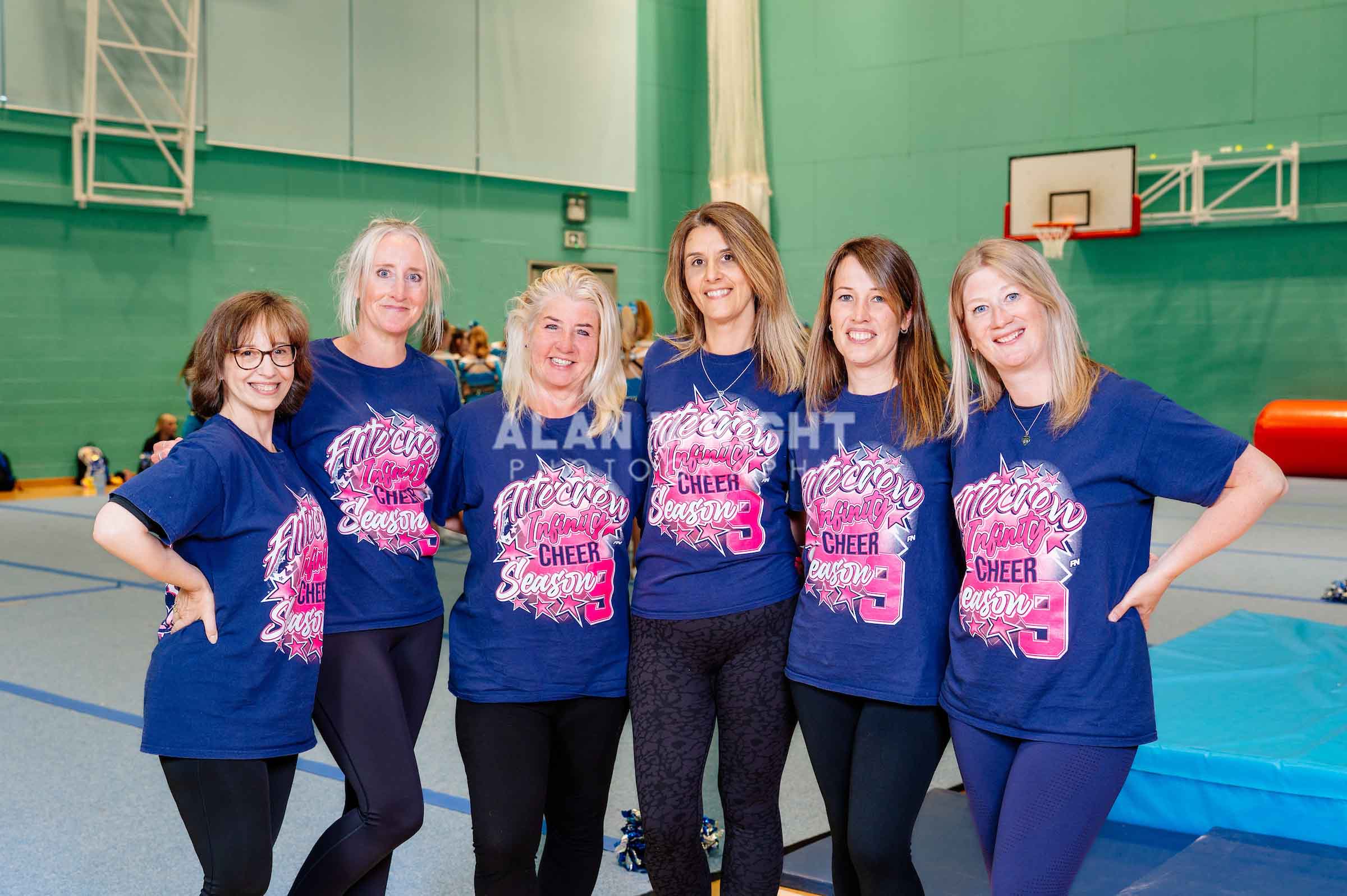
Parents assist with administrative duties (©AAH/Alan Wright)
Isa: I joined Flitecrew Trampolining when I was four and eventually reached a national standard. I also joined the cheer side when it launched and believe I’m the only founder member still competing, as part of Vortex. All of my best friends are at Flitecrew, so it is a huge part of my life. Now, I have made a transition into coaching, although I find that I’m more nervous than ever before a competition, as I know how hard all the children have worked on their routines and I want them to do well!
Jordan: Isa has developed from being a great athlete to a great coach. She is a role model to others and a perfect example of our family ideology. She isn’t the only one in the club who started cheer when they were very little and is now coaching one of our teams, which speaks volumes about the club. People stay because they love it, but also because they see their younger self in the girls who are cheering now and want to give them the same wonderful experiences.
Laurel: We now have equally strong cheer and trampolining sections, and it really does feel like a family. I think that is why so many parents get involved in helping with administrative and welfare duties, and we all have a wonderful time when we’re away at competitions, or on our annual trip to Disneyland Paris. It’s incredible how much Flitecrew has grown, although it’s no surprise to me, as cheer offers so much to young people, in terms of their health and fitness, understanding the importance of commitment and teamwork, while creating lasting friendships.
Further information: Flitecrew offers trampolining and cheer sessions at The Bridge in Broadbridge Heath, with free taster sessions for newcomers. Competition try-outs are held from 3-10 July. www.flitecrewtrampolineandcheerclub.com
Article first published on 1st July 2026. Photos: Alan Wright Photography; Words: Ben Morris