

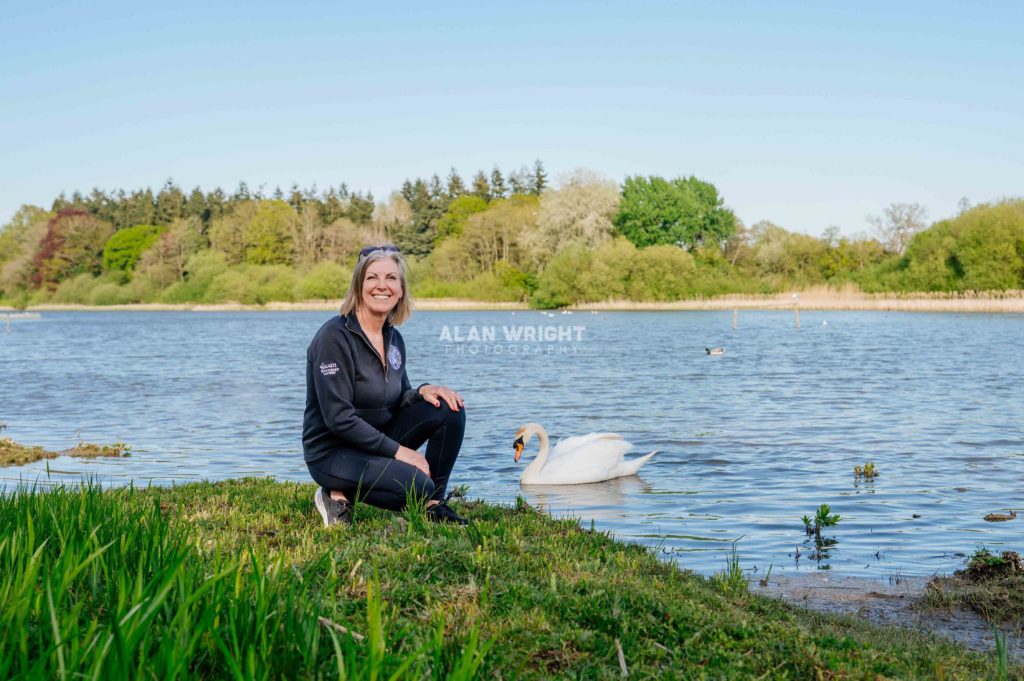
Sally Wright with Lori at Warnham Local Nature Reserve (©AAH/Alan Wright Photography)
Sally Wright has rescued dozens of swans and other water birds in the Horsham District. Having founded Southwater and Horsham Swan Rescue, Sally helps protect one of the UK’s most elegant native species. AAH met Sally by the banks of Warnham Mill Pond to find out more…
How did you become a swan rescuer?
I’ve lived in Southwater for nearly 25 years and regularly walk around the Country Park. As an animal lover, I would often stop to feed the swans and other water birds on the lake. Four years ago, I spotted a swan stuck in the ice during a harsh winter. Swans are usually strong enough to break free, but I knew this particular bird had a wing injury. After it had been stuck for some time, I became concerned. The fire service wouldn’t intervene and I didn’t know who else to call. I was quite prepared to jump in to try and save it myself, but then I heard about the Swan Sanctuary. That was how my journey as a volunteer rescuer began.
What happened to that swan?
Danni Rogers, who volunteers for Swans & Friends Bird Rescue in Copthorne and also the more widely-known Swan Sanctuary, visited the Country Park. No sooner had he arrived than the rain came, softened the ice and allowed the bird to free itself naturally. He was surprised I had stayed at the scene, as most people’s involvement ends with a phone call. Within a month, the same swan had a fishing hook caught in its bill, so I called Danni again. He was having to travel from Camberley, as there was no dedicated swan rescue volunteer in the Horsham District at the time. He felt I had the passion and empathy required, so I established Southwater and Horsham Swan Rescue, later becoming a volunteer rescuer for the Swan Sanctuary too.
What is the Swan Sanctuary?
The sanctuary is based in Shepperton, Middlesex, and is one of the oldest swan charities in the UK. It is on 24-hour alert, 365 days a year, and when a distress call is made, a local rescuer responds as quickly as possible. The sanctuary has trained me to handle birds correctly and deal with difficult situations – such as removing fishing hooks and line – and how to help with their rehabilitation. I also volunteer for Swan Lifeline, a charity devoted to the care of swans in the Thames Valley.
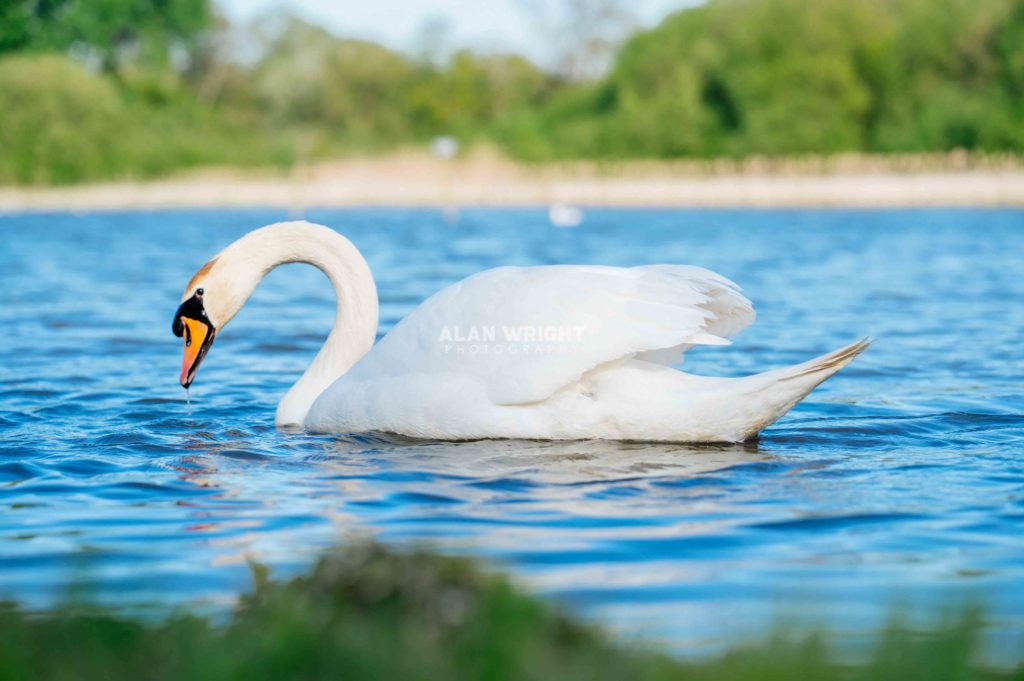
Lori, a Male Cob at Warnham Local Nature Reserve (©AAH/Alan Wright Photography)
Is this a full-time role?
I work for Paragon Bank and they’re very supportive of my voluntary work, allowing me to respond quickly to incidents. Being employed helps fund a lot of what I do, as the sanctuary receives no government funding. So, I can afford to provide swans with the care they need, especially those I rehabilitate at home. It’s expensive, but I don’t mind as swans are my passion.
What was your first solo rescue?
A swan was chased away from Rockwood Golf Course and landed on the A24. It caused long queues and I upset other motorists by cutting through the traffic! The police asked me what I was doing, but when I explained my role, were happy for me to transport the injured bird to the Swan Sanctuary. Swan’s nest in early spring, with eggs normally hatching in May or June. So, from December to February, the cob (male) and pen (female) start preparing for a new brood and chase away the previous year’s cygnets, who then have to fend for themselves. This is a busy time for rescuers, as many cygnets find trouble. Another busy period is when eggs start to hatch, as the first few weeks of a cygnet’s life are perilous with foxes, rats, herons, crows, gulls and even pike posing a threat.
What problems do year-old cygnets face?
It is a confusing time for them, as having been nurtured for almost a year, they suddenly find themselves being chased away by their own parents. Some cygnets find another waterway, as they’ve been taught how to fly properly. They may have already flown at height and perhaps even flown with their parents to another lake. However, at Southwater Country Park, the resident swans are 19 (wild swans typically live around 20 years) and their cygnets are not shown how to fly long distances. Also, the lake lacks the space swans need to hone their landing and take-off techniques. Swans are like jumbo jets – they need a long runway! Some cygnets that have never flown properly fail to attain enough height to find other waterways, often landing in adjacent fields or even busy roads.
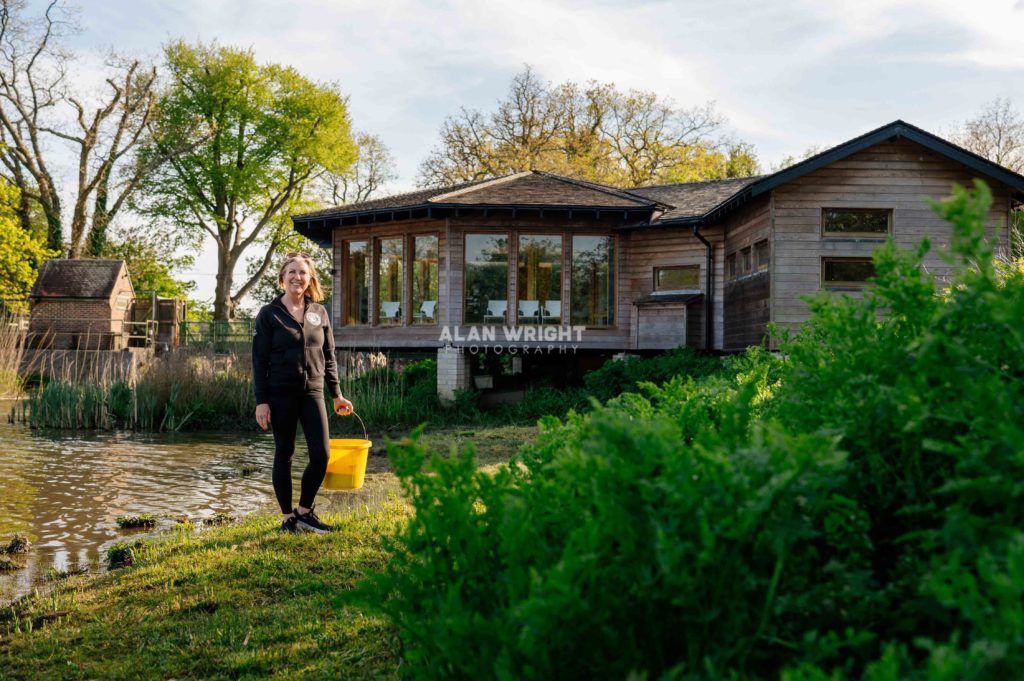
Sally Wright at Warnham Local Nature Reserve (©AAH/Alan Wright Photography)
Are you nervous when approaching a swan?
They can hiss all they like, but I‘ve never been nervous about them injuring me. The important thing is to approach with confidence and handle them carefully, without causing injury or distress. Sometimes it helps to lure them into shallow water with food, and as the swan dunks its head, hold the crook of their neck, rather than higher up, which is more fragile. You shouldn’t pull on a bird’s wing, but they will use them as a defensive measure. As a swan’s wingspan concertinas out to two metres, you need to hold the body tightly to ensure they can’t use them against you.
Do you work alone?
I’m part of a network, so know lots of rescuers in the region. In certain situations, everyone pulls together. Sometimes, we even go out in kayaks to check on a swan or lure it towards the bank, and on occasions I’ve waded in to help an injured bird. I regularly work alongside Clare Hill, who looks after swans on Tilgate Lake, and there are other many animal lovers who live locally and enjoy feeding the birds. I couldn’t do my job without them, as they call me when something isn’t right.
Can you identify the swans you rescue?
I know most of the resident swans in the Horsham District, but we “ring” any swan we find without one. Identification rings on their legs helps to identify birds and monitor their movements. The ringing is carried out at a flock lake in Redhill by Jake Everitt, Countryside and Ecology Manager at Horsham District Council. Jake is an accredited British Trust for Ornithology ringer, and demonstrates bird ringing as part of his conservation work. He does a huge amount for local wildlife and has given me great support too.
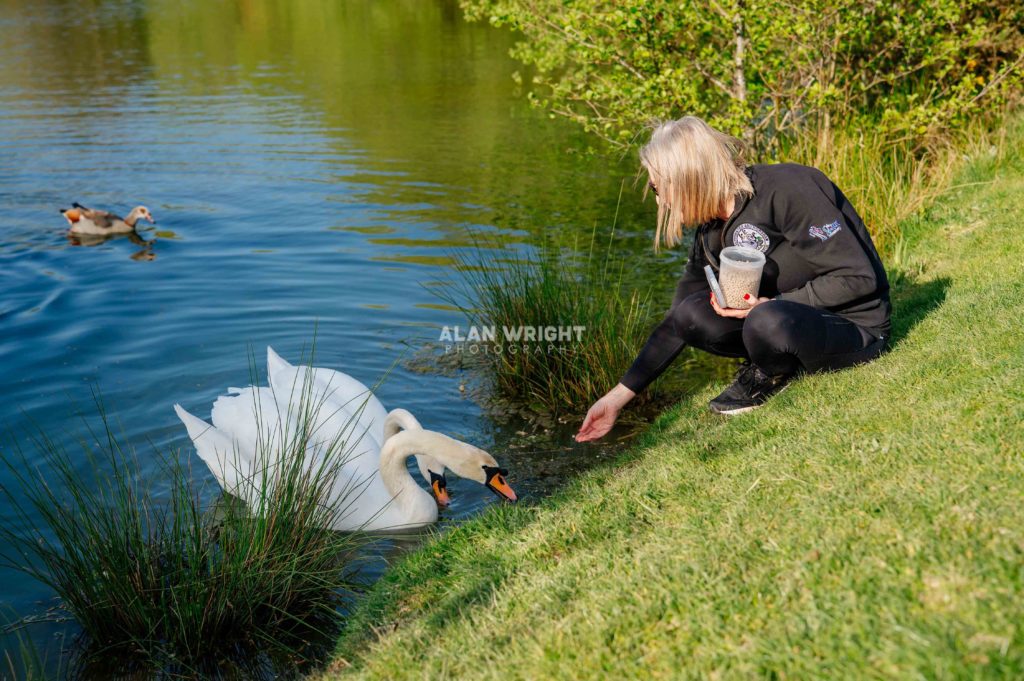
Sally Wright at Rookwood Pond (©AAH/Alan Wright Photography)
What happens to the birds you rescue?
Sometimes I care for them at home, if they just need time to rehabilitate. On one occasion, a swan had been rescued from Tilgate Park, covered in mud and utterly exhausted. It didn’t have any injuries and just needed food, rest and recuperation. Cygnets that have been chased away by their parents cannot return home, so are often taken to the flock lake in Redhill, which is currently home to about 45 swans. There, they have space to recover and many meet their partner on the lake. Mature swans may be relocated to private lakes, with permission of the landowner, or released on the River Adur. There is often a flock around Shoreham Harbour, although many find their way up-river to tranquil spots around Bramber, Henfield and Partridge Green.
Do you see many human-inflicted injuries?
Most incidents relate to natural behaviour, like a cygnet being chased away, or a swan being hurt in a territorial battle. Just last month, Arthur – a cob who was paired with Martha at Rookwood – died. That was probably due to a territorial dispute. There are occasionally incidents where swans have been hit with catapults or pellet guns. My concern is, if children are doing this at 13, what will they do next? Fortunately, we haven’t encountered many such incidents in the last few years.
Further information: For more about Southwater and Horsham Swan Rescue, visit www.southwaterandhorshamswanrescue.co.uk
Originally published in the May 2026 edition of AAH Magazine. Photos: Alan Wright Photography; Words: Ben Morris