

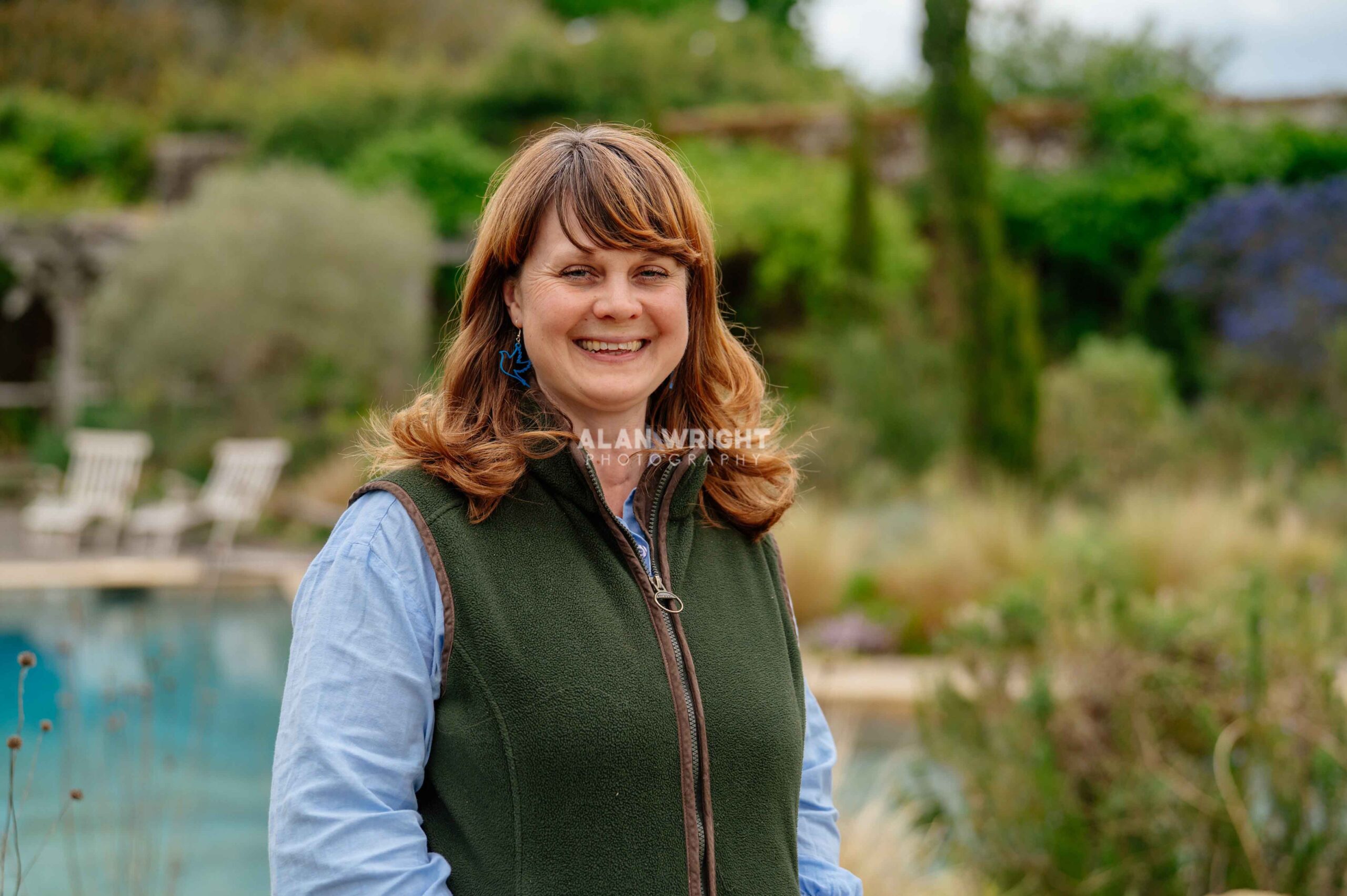
Bea Ayling often leads Walled Garden Tours (©AAH/Alan Wright Photography)
Many residents of the Horsham District will be aware of the rewilding project taking place on the Knepp Estate in West Grinstead.
The pioneering project has seen about 3,500-acre given back to nature, with roaming herds of Longhorn cattle, Tamworth pigs, Exmoor ponies and red and fallow deer shaping the land and ecosystem. Consequently, Knepp has become a safe haven for rare species including turtle doves, nightingales and purple emperor butterflies.
An ever-increasing number of people visit annually (to the extent that an overflow field is deployed for when the original overflow car park is full!), following marked trails as they seek out rare species. The most notable of these is the white stork, which has been reintroduced to the estate and is thriving, with a growing number of breeding nests.
However, Knepp also demonstrates rewilding on a much smaller scale. The Rewilded Walled Garden presents ideas on how we can all increase biodiversity in our own gardens and contribute to a more dynamic ecosystem. Walled Garden Tours (which begin from the Apple Shed near the castle in Shipley, not from the Wilding Kitchen and Shop at Dial Post) attract visitors and gardening enthusiasts from around the world. Bea Ayling, a former architect turned gardener, often leads the tours.
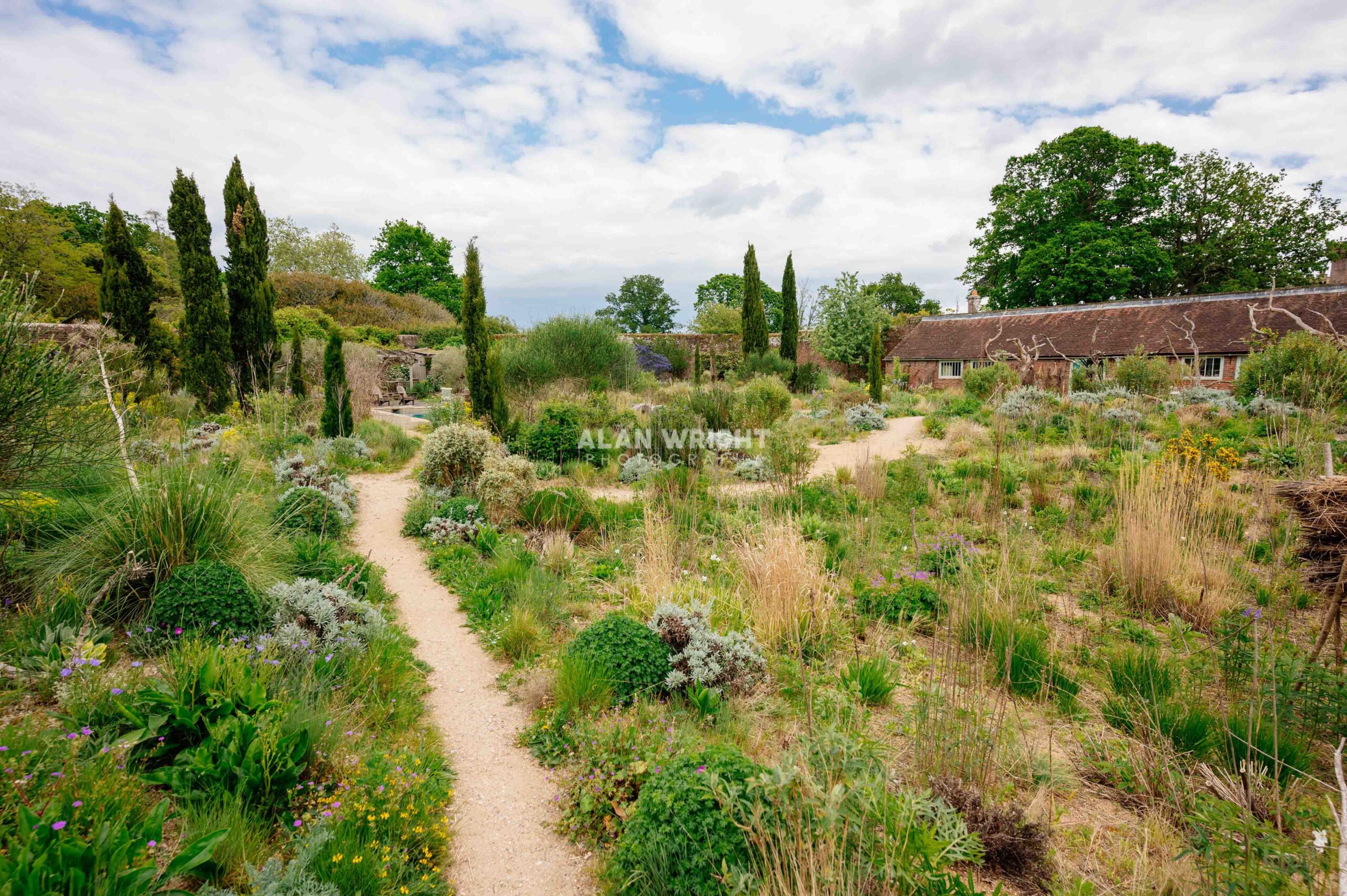
The Rewilding Garden encourages natural evolution and adaptation (©AAH/Alan Wright Photography)
Bea said: ‘The Knepp estate is vast and people cannot replicate rewilding on such a scale, with herbivores roaming and shaping the landscape, providing opportunities for birds, small mammals and insects. However, people can make a difference in their own homes and gardens and one of the objectives of the Walled Garden is to demonstrate what’s possible within smaller spaces.’
‘Many gardeners adopt a conventional mindset, using mulch to protect plants and cutting them back once they’ve flowered, keeping a garden looking neat and tidy. However, a little more mess and a little less tidying can increase biodiversity. That is what we try to encourage.
‘I first visited Knepp with a group of Garden Illustrated magazine readers, where I met Charlie Harpur (head gardener) and Tom Stuart-Smith (landscape designer). It was a transformative experience. As a gardener myself, I have always tried to convince people to be more experimental to encourage pollinators and other wildlife. So, when I visited Knepp, it felt like all the pieces of the puzzle were coming together. I left exhilarated, sure that the estate was presenting a blueprint for the future.
‘Now, leading gardeners such as John Little (brownfield gardening guru) are demonstrating ways to improve the ecological impact of small spaces, while Gardeners’ World showcase wildlife-friendly spaces. If visitors take away just one idea from the Walled Garden to use at home, that’s a win for everyone. That is what I love about my role: I help sow a seed.’
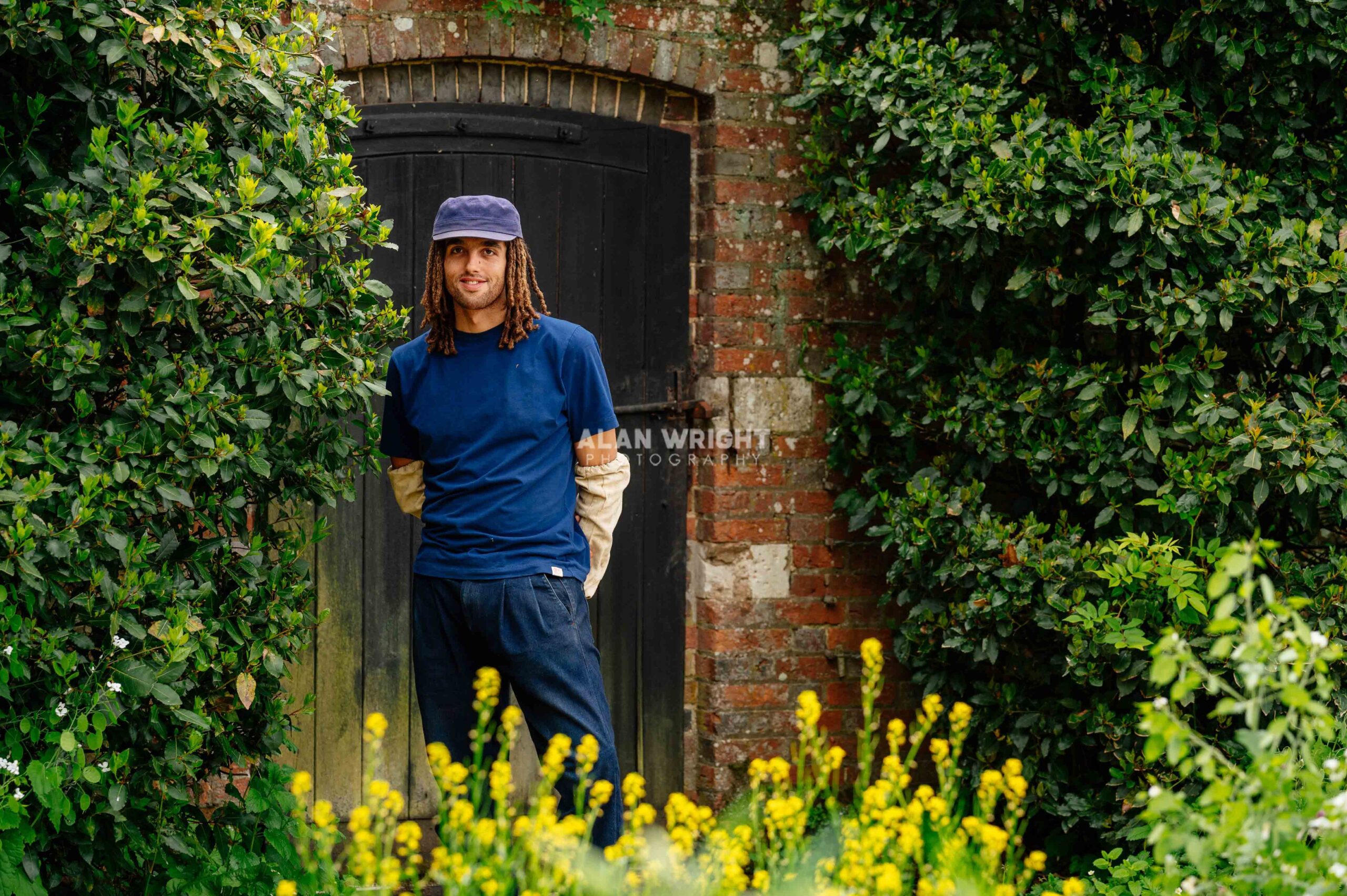
Josh Chalmers in the Walled Garden (©AAH/Alan Wright Photography)
1000 PLANTS
The Walled Garden is located next to the modern Knepp Castle, which people following the long Red Route around the estate’s perimeter will walk past. When it came to designing the garden, Knepp consulted with some of the UK’s most creative minds, including landscape designer Tom Stuart-Smith, James Hitchmough (professor of horticultural ecology at the University of Sheffield), Mick Crawley (emeritus professor of plant ecology at Imperial College, London) and Jekka McVicar (organic gardening expert). So, it may be surprising to hear that the project began by dumping 400 tonnes of crushed brick and concrete over the old croquet lawn! However, this created contours that replicated the lumps and bumps that occur in natural settings.
The gardening team planted over 1,000 different species, focusing on plants resilient to disease, drought and adverse weather conditions. There are some eye-catching species, such as the beautiful Japanese wisteria floribunda that wraps around a pergola near the swimming pool, and a Chinese wisteria that scales the southern wall to provide ideal cover for small birds. It also features moon carrot flowers – which produce striking domes of pinkish-white flowers – and giant coneflower– which can reach towering heights – and the Tennessee coneflower, famed for its beautiful purple flowers.
But the garden isn’t just about beauty; it’s about encouraging a range of birds, bugs, butterflies, spiders and other invertebrates. So, there are dead wood and log piles for countless beetles, spiders and other invertebrates, and sand mounds that encourage ants and even the bee wolf wasp, which preys on bees. Despite the abundance of raptors on the estate, voles are regularly spotted and they too are shaping the ecosystem, despite having munched through freshly-bloomed tulips!
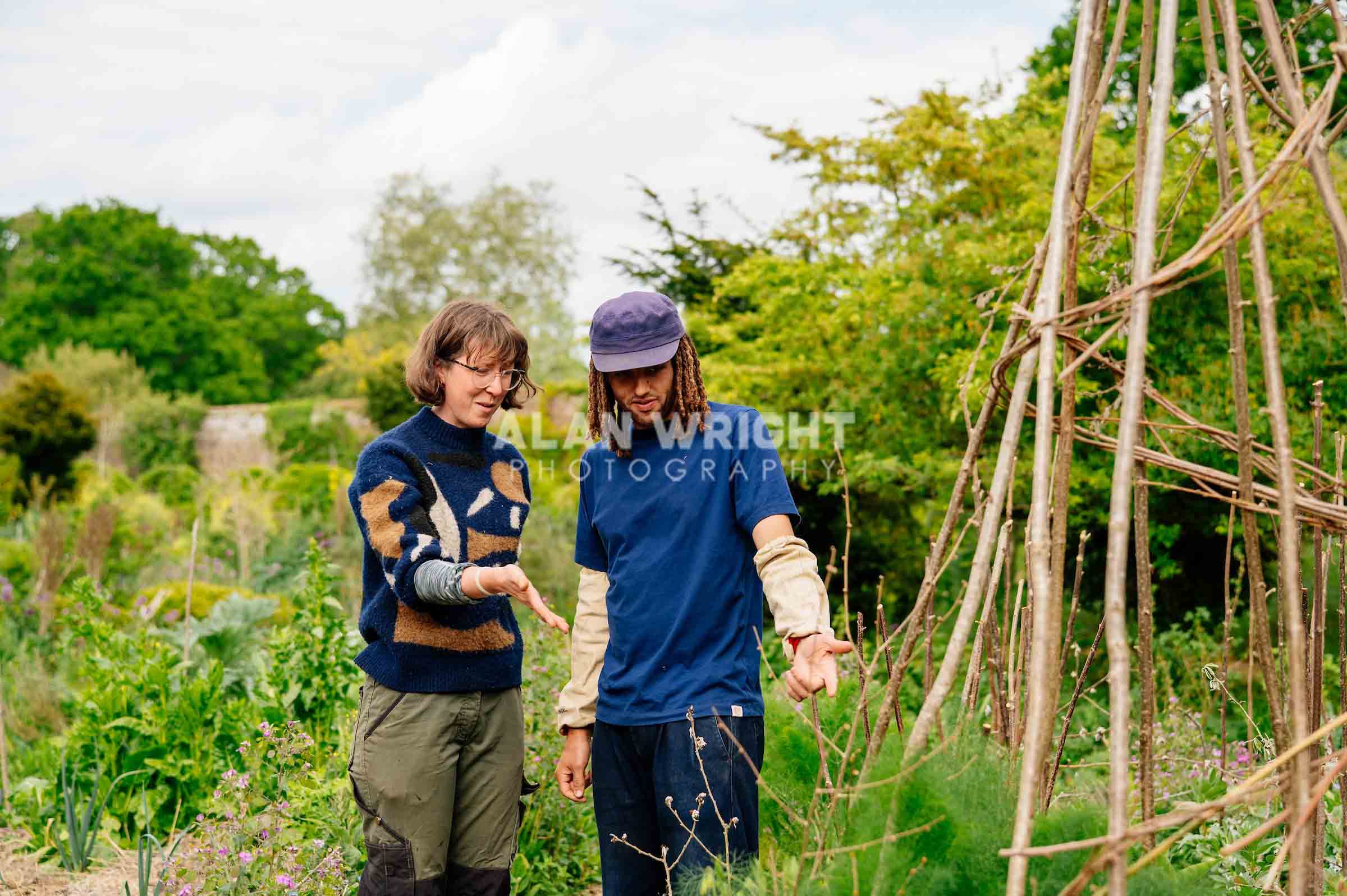
Josh Chalmers and Olivia Freuler in the Walled Garden (©AAH/Alan Wright Photography)
Josh Chalmers has been part of the gardening team at Knepp for two and a half years. He spends three days a week in the Walled Garden and two tending gardens around the Wilding Shop and Kitchen. He says that the Walled Garden has its own narrative…
‘We are trying to create as much biodiversity as possible, planting a wide variety of plants to attract as many pollinators, insects and bugs as we can. It’s interesting, as some plants have proved to be more resilient than others in this environment. But it’s not just about survival of the fittest, as we ensure it retains plenty of variety to increase its biodiversity.
‘Traditionally, many gardens have a regimental layout, with gardeners focusing on emulating beautiful flowers year-after-year. While we do have some eye-catching plants, we promote a much wilder, more dynamic environment. For instance, we had a beautiful Campanula bellflower that thrived for several years, but hasn’t germinated for two years due to dry springs. They may be lying dormant and will rise again, but we don’t know for sure, which is one of the intriguing things about the project.
‘We work closely with ecologist and entomologist Graeme Lyons, who monitors biodiversity across the estate, and have seen an almost 50% increase in the number of beetles in dead wood and other similar habitats. So, what we’re doing must be working.’
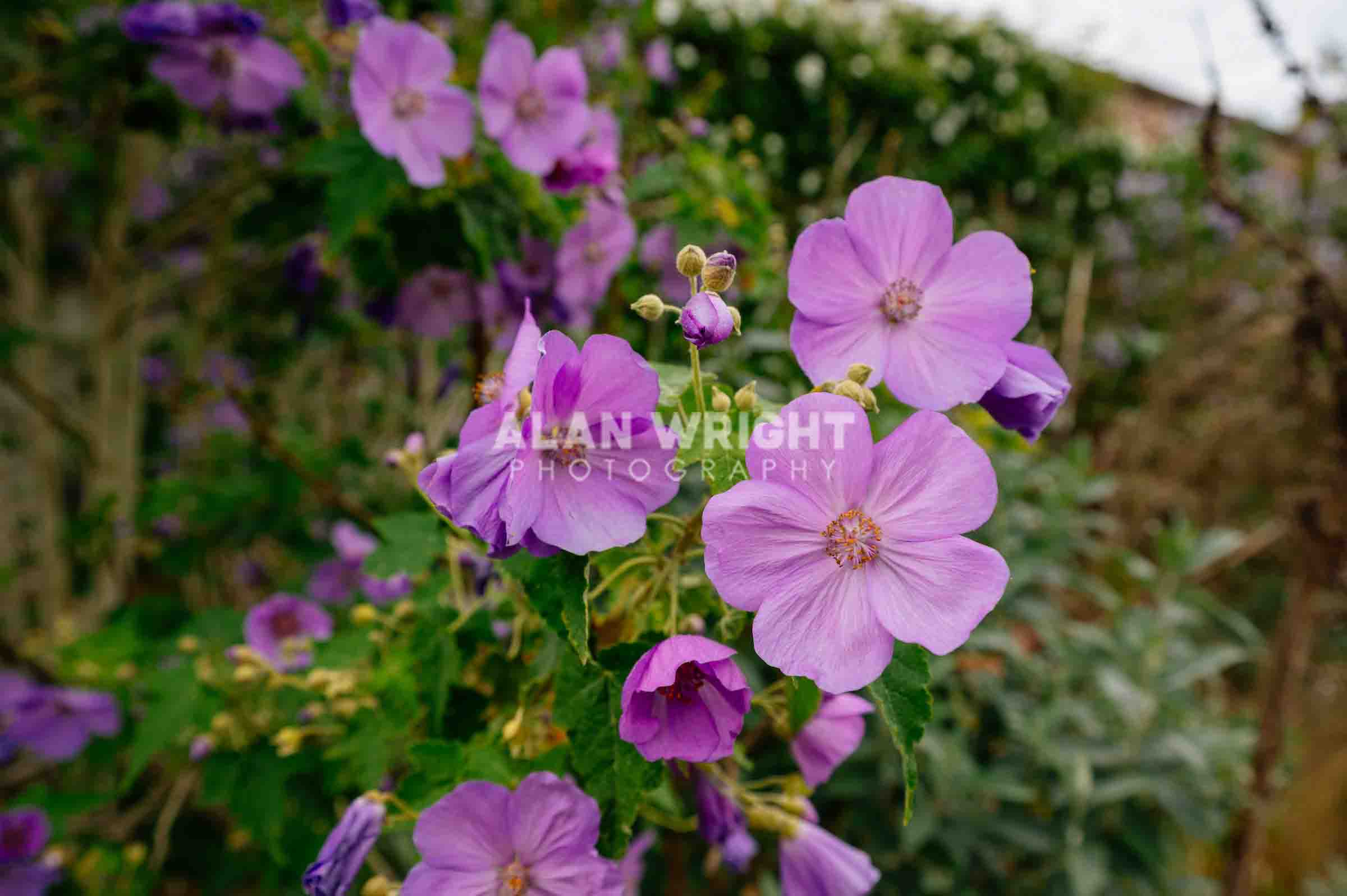
The Rewilded Walled Garden (©AAH/Alan Wright Photography)
KITCHEN GARDEN
The Walled Garden is essentially divided into two, with half devoted to rewilding and the other being a Kitchen Garden that provides fruit, salad and vegetables for the family. Knepp has been owned by the Burrells since 1787, with Sir Charlie moving into the castle in 1987. Since 2000, the land has been no longer used for agriculture and instead devoted to a pioneering conservation project. Charlie and Lady Burrell, the author Isabella Tree, continue to promote the virtues of rewilding and in January, delivered the first Wilding Gardens Conference.
The Kitchen Garden demonstrates ways to improve sustainability. Knepp’s gardeners use three different regenerative systems, each working with natural processes. High-yield annual cropping methods are used to grow produce such as artichokes, alliums (onions, leeks, garlic etc), rhubarb and fruit trees, including Bergamot orange and Crab apples. No-dig or minimal tillage methods minimise damage to soil and encourage regeneration. Agroforestry mimics a woodland setting, where plants integrate with trees and shrubs to create three-dimensional ecosystems. So, in some areas, gardeners have combined mushroom compost with home-made compost to create more fertile, moisture-retentive soil.
The garden also adopts syntropic farming methods, which sees diverse species planted closely together to increase biodiversity and improve soil regeneration. Meanwhile, pathway edges have been softened by the planting of edible herbs such as rosemary, thyme and lavender, which attract pollinators.
Olivia Freuler, a new member of Knepp’s gardening team, hopes to make the Kitchen Garden even more productive. She said: ‘I read Isabella’s book, Wilding: The Return of Nature to a British Farm, and was inspired. I had never visited the estate before though, so it has been amazing to discover everything that is going on. The family like to pick their own vegetables to cook with, but the Kitchen Garden is also part of an ongoing experiment. That sums up gardening nicely, as you never really finish; it’s always a work in progress!’
Further information: For more details about Knepp’s Walled Garden or to book a tour, visit: https://knepp.co.uk/garden-tours/
First published on 2 August 2026. Photos: Alan Wright Photography/Words: Ben Morris